Does Brain Training Work? The Science, The Hype, and The Surprising Truth
How a billion-dollar industry promised to make us smarter, got smacked by the FTC, then earned FDA approval – and what it all means for your brain.
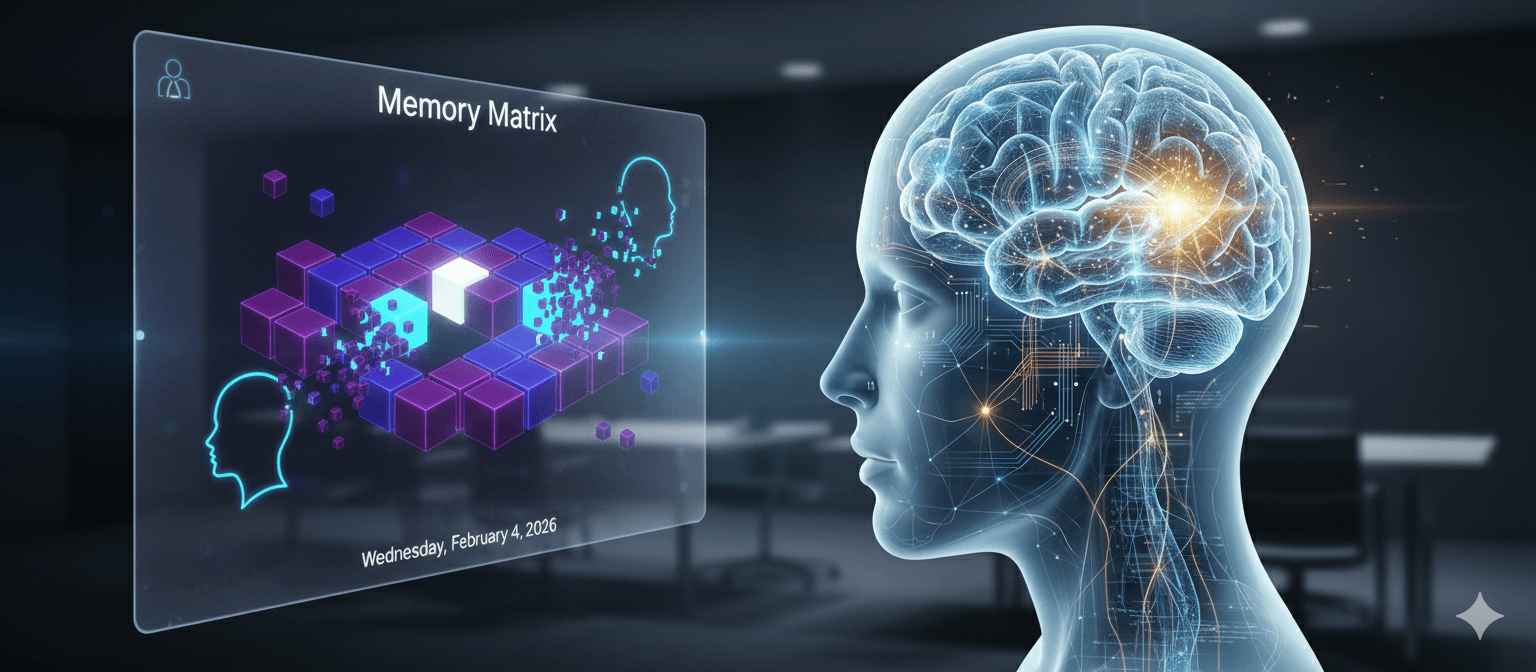
You open the app. A grid flashes on screen. Numbers appear and disappear. Your job: remember which numbers appeared where, but only from three steps back. It’s called “Memory Matrix” and right now, you’re terrible at it.
But you play every day. And something interesting happens: you get better. Much better. What started as impossible becomes challenging, then manageable, then almost automatic. The app notices and cranks up the difficulty. Now you’re tracking five items back instead of three. Your brain feels like it’s doing push-ups.
The question that haunts neuroscience: Is your brain actually getting stronger, or are you just getting better at this specific game?
Welcome to the most contentious question in cognitive science – and one of the most successful marketing campaigns ever created.
The Birth of an Industry
The Promise (Early 2000s)
In the mid-2000s, a simple idea captured the public imagination: your brain is like a muscle. And just like you can go to a gym to strengthen your biceps, you could train your brain to become fundamentally more powerful.
Companies like Lumosity, CogniFit, and Brain Age launched apps and games based on cognitive psychology principles. The pitch was irresistible:
- Play fun games for 15-20 minutes per day
- Improve memory, attention, processing speed, and problem-solving
- Increase your IQ by 10-15 points
- Prevent cognitive decline and dementia
- Boost work performance and daily functioning
The appeal was universal: Who wouldn’t want to become smarter simply by playing games?
By 2013, the brain training industry was worth over $1 billion globally. Lumosity alone had 70 million users. Schools incorporated brain training programs. Companies offered them as employee benefits.
The industry grew rapidly: Celebrity endorsements, testimonials from satisfied users, scientific-sounding language about “neuroplasticity” and “cognitive enhancement.” The idea felt intuitively right – of course you could train your brain like a muscle!
There was just one problem: the scientific evidence didn’t support the broad claims being made across the industry.
The Science Behind The Hype
To understand why brain training became controversial, you need to understand two concepts: near transfer and far transfer.
Near Transfer vs. Far Transfer
Near transfer: You get better at tasks very similar to what you practiced.
- Example: You practice memorizing number sequences, you get better at memorizing number sequences
- This happens reliably and consistently
- Nobody disputes this
Far transfer: Improvement in one domain transfers to completely different domains.
- Example: You practice memorizing number sequences, and you also get better at learning languages, solving math problems, and remembering where you parked
- This would mean fundamental cognitive enhancement
- This is what brain training companies promised
- This is what the science mostly failed to find
Think about it this way: If you practice free throws in basketball every day, you’ll get excellent at free throws (near transfer). But you won’t automatically become better at tennis, golf, or archery (far transfer), even though they all involve hand-eye coordination and precision.
Brain training games work the same way: you get better at the games, but the improvement doesn’t transfer to real-world cognitive abilities.
The Research Reality
Starting around 2010, rigorous studies began examining whether brain training actually worked. The results were sobering:
2010 – Owen et al. (BBC Brain Training Study)
- 11,430 participants
- Six weeks of brain training
- Result: Participants improved on the trained tasks but showed no improvement on untrained cognitive measures
- Conclusion: “No evidence that brain training improves general cognitive function”
2014 – Stanford Consensus Statement
- 70+ neuroscientists and cognitive psychologists
- Joint statement: “Claims promoting brain games are frequently exaggerated and misleading”
- Core issue: “Little evidence that playing brain games improves performance on other tasks”
2016 – Simons et al. Meta-analysis
- Reviewed decades of research
- Found minimal to no far transfer effects
- Noted publication bias (studies showing null results less likely to be published)
The scientific consensus: Brain training makes you better at brain training games. Period.
But wait – aren’t memory, attention, and processing speed “fundamental abilities”? How can training them NOT improve your general cognitive function?
This is where it gets interesting.
The Transfer Problem: Why “Generic Skills” Aren’t Generic
Here’s the paradox that makes brain training so confusing:
If you train “working memory” in a game, aren’t you training… working memory?
Yes and no. This is the hardest concept to grasp about cognitive training.
The Specificity of Cognitive Skills
Your brain doesn’t have a single “memory” ability like a computer has RAM. Instead, you have hundreds of specialized memory systems:
- Visual-spatial memory (where you parked)
- Verbal working memory (remembering a phone number)
- Episodic memory (what you ate for breakfast)
- Procedural memory (how to ride a bike)
- Face recognition memory
- Name recall memory
- And hundreds more
When you train “memory” in a Lumosity game, you’re training ONE specific type – usually visual-spatial working memory with abstract symbols on a grid.
You get better at that. Measurably, significantly better.
But it doesn’t make you better at remembering names at parties, where you left your keys, or what you studied for an exam. Those use different neural circuits, different strategies, different brain regions.
It’s like getting incredibly good at deadlifting, then being surprised you’re not automatically better at swimming. Both require strength, but the muscle recruitment patterns, motor control, and physical demands are completely different.
The Expertise Paradox
Here’s what actually happens when you get better at Lumosity games:
Week 1: Memory Matrix is impossibly hard. You’re using your prefrontal cortex intensely, recruiting attention, working memory, and executive control. Your brain feels “taxed” because it IS taxed – you’re near your cognitive limits.
Week 10: Memory Matrix Level 5 is challenging but manageable. Your brain has done something remarkable: it’s developed task-specific expertise.
What changed in your brain:
- You’ve learned patterns in how the game works
- You’ve developed strategies (grouping, chunking, spatial anchors)
- Your brain’s visual processing has tuned to the specific stimulus features
- Neural circuits specific to this task have strengthened
- You process the game more automatically, using less conscious effort
This is real improvement! Your brain HAS changed. Synaptic connections have strengthened. Neural processing is more efficient.
But it’s specific expertise, not general enhancement. Like becoming fluent in Spanish – you’ve massively improved your language ability, but only for Spanish. You haven’t become generally “better at language.”
What’s Actually Happening In Your Brain?
When you train consistently on cognitive tasks, three types of neural changes can occur:
1. Neurogenesis (Growing New Brain Cells)
The old belief: You’re born with all the neurons you’ll ever have.
The reality: Your hippocampus (memory center) generates thousands of new neurons daily throughout your life.
Does brain training increase neurogenesis?
- Some evidence that exercise dramatically increases neurogenesis
- Learning complex new skills (language, musical instrument) may increase it
- Simple repetitive games? Little evidence
Verdict: Brain games probably aren’t creating significant new neurons.
2. Synaptic Plasticity (Strengthening Connections)
This is the primary mechanism of learning:
- Neurons that fire together wire together
- Repeated activation strengthens synaptic connections
- This happens constantly during learning
Does brain training create synaptic plasticity?
- Absolutely YES
- Every time you play, relevant circuits are activated and strengthened
- This is why you get better at the games
The problem: The plasticity is specific to the trained circuits.
Think of it like this: If you practice writing with your left hand every day, the motor circuits controlling your left hand writing will strengthen dramatically. But your right hand writing won’t improve. Same brain, same motor cortex, but the specific circuits are different.
3. Myelination (Building Better Neural Highways)
Myelin is the insulation around neural axons:
- Like rubber coating on electrical wires
- Increases signal speed by up to 100x
- Develops through repeated use
Complex skills build myelin:
- Musicians have enhanced myelination in motor circuits
- Taxi drivers have it in spatial navigation circuits
- Athletes have it in relevant motor control regions
Does brain training build useful myelination?
- Yes, for the specific trained tasks
- No, for general cognitive function
- The “highways” you’re building only lead to brain game performance
Why Some Brain Training Works and Most Doesn’t
This is the crucial question: If brain games don’t transfer, why do some cognitive activities (learning languages, playing chess, musical training, meditation) seem to have general benefits?
Activities With Broad Cognitive Benefits:
1. Learning a New Language
- Engages multiple brain systems simultaneously
- Requires memory, attention, pattern recognition, AND real-world application
- Forces you to think in new ways constantly
- Has immediate practical utility (you use it in life)
- Far transfer evidence: Improves executive control, multitasking, attention
2. Learning a Musical Instrument
- Integrates motor control, auditory processing, memory, timing, emotion
- Requires intense focus and practice with immediate feedback
- Builds neural connections across multiple brain regions
- Has real-world performance pressure
- Far transfer evidence: Improves verbal memory, spatial reasoning, attention
3. Chess/Go at High Levels
- Develops pattern recognition across billions of possible positions
- Requires deep strategic thinking and planning
- Engages working memory, calculation, visualization, judgment
- Has rich strategic concepts that apply broadly
- Far transfer evidence: Modest improvements in problem-solving, planning
4. Meditation
- Trains attention regulation (the most fundamental cognitive skill)
- Increases awareness of mental states
- Directly impacts stress, emotion regulation, focus
- Far transfer evidence: Improves attention, reduces cognitive decline, enhances emotion regulation
5. Physical Exercise
- Increases BDNF (brain-derived neurotrophic factor) – literally “miracle grow for the brain”
- Improves blood flow to the brain
- Stimulates neurogenesis in hippocampus
- Reduces inflammation
- Far transfer evidence: Strong improvements in memory, executive function, processing speed
What Makes These Different from Brain Games?
Complexity: They engage multiple brain systems simultaneously, creating rich neural networks.
Meaningfulness: They connect to real-world contexts and applications, making learning deeper and more transferable.
Challenge + Support: They provide progressive challenge with immediate feedback and practical application.
Embodiment: Many involve physical movement, sensory integration, or emotional engagement.
Brain games lack most of these qualities. They’re isolated, abstract, repetitive tasks with no real-world analog. Your brain treats them like “fake work” – it gets efficient at them, but doesn’t build generalizable skills.
The Lumosity Story: From $2 Million Fine to FDA Clearance
The rise and fall (and rise again?) of Lumosity perfectly captures the brain training saga.
Act I: The Boom (2007-2015)
Lumosity launched with slick marketing, celebrity endorsements, and scientific-sounding claims:
- “Improve core cognitive abilities”
- “Perform better at work and in everyday life”
- “Delay age-related cognitive decline”
- “Backed by research from leading universities”
By 2013, they had 70 million users paying $15/month or $300/year. The science-y veneer made it credible. The testimonials made it feel real.
Act II: The Fall (2016)
January 5, 2016: The Federal Trade Commission hit Lumosity with charges of deceptive advertising.
The verdict: $2 million fine (reduced from $50 million original penalty).
The FTC’s findings:
- Claims were not backed by adequate scientific evidence
- Studies cited were methodologically flawed or misrepresented
- No evidence that brain games improve performance outside the games
- No evidence of preventing cognitive decline or dementia
What Lumosity had to do:
- Stop claiming their games improve real-world performance
- Stop claiming they prevent cognitive decline
- Notify subscribers about the FTC action
- Pay refunds to some customers
The industry reeled. If the biggest player couldn’t make those claims, nobody could.
Act III: The Redemption (2024)
August 2024: Something remarkable happened.
Lumosity received FDA clearance for a prescription medical device – a brain training app specifically for adults with ADHD to improve attention.
What changed?
Lumos Labs (Lumosity’s parent company) conducted proper clinical trials showing their app specifically improves attention in ADHD patients – a narrow, evidence-backed claim.
What they CAN now claim (with prescription):
- Improves attention in adults diagnosed with ADHD
- Clinically validated digital therapeutic
- Prescription medical device (not just a game)
What they still CANNOT claim:
- General IQ improvement
- Prevents dementia or cognitive decline
- Improves performance for people without ADHD
- Transfers to real-world tasks beyond attention
The Lesson from Lumosity’s Journey:
2007-2016: “Our games make everyone smarter and prevent Alzheimer’s!” → FTC: No evidence. $2M fine.
2024: “Our prescription app improves attention specifically in diagnosed ADHD patients, proven in clinical trials.” → FDA: Cleared.
The difference? Narrow, specific, evidence-backed claims vs. broad, unsubstantiated marketing hype.
Your Brain on Lumosity: Why It Feels Like It’s Working
So you play Lumosity regularly. You improve dramatically. The games get harder, more taxing, more challenging. Your brain feels like it’s working harder.
Is something happening? Absolutely.
Is it making you generally smarter? Probably not.
Here’s what’s actually occurring:
The Progressive Challenge Effect
When Memory Matrix gets harder, your brain experiences increased cognitive load:
- More items to track
- Faster presentation
- More complex patterns
- Greater attention demands
This feels taxing because it IS taxing. Your working memory is at capacity, your prefrontal cortex is firing intensely, you’re deeply focused.
But “taxing” doesn’t equal “strengthening in a general way.” It equals “working hard at this specific task.”
Think about learning to juggle. Day 1 is impossibly hard – your brain is overwhelmed trying to track three balls. Week 10, three balls is easy, so you try four. Your brain is taxed again.
You’ve become an excellent juggler. Your visual tracking, motor timing, and hand-eye coordination for juggling are superb.
But you haven’t become generally better at hand-eye coordination. You’re still average at baseball, tennis, or catching keys someone tosses you.
The improvement is real. The transfer is minimal.
The Engagement Loop
Brain games succeed at one thing brilliantly: keeping you engaged.
- Progressive difficulty maintains challenge
- Achievements and scores provide rewards
- Visible improvement creates satisfaction
- The feeling of mental work creates perceived benefit
This isn’t deceptive – the games ARE fun, challenging, and engaging. Many people genuinely enjoy them.
The problem is when “engaging” gets confused with “fundamentally beneficial.”
Candy Crush is also engaging, progressively challenging, and requires genuine cognitive skill. Nobody claims it makes you smarter.
The Nuanced Verdict: What Brain Training Actually Does
After decades of research, hundreds of studies, and billions of dollars spent, here’s what we actually know:
What Brain Training DOES Do:
- Makes you better at the trained tasks This is real, measurable, and consistent You will improve significantly with practice
- Provides cognitive stimulation Mental activity is better than mental passivity Engagement and challenge are good for brain health
- May improve specific narrow abilities Some evidence for improvements in the exact trained domain Ex: ADHD attention training may improve attention in ADHD patients Ex: Working memory training may slightly improve working memory span
- Creates subjective sense of cognitive engagement Feeling mentally active and challenged is valuable May increase confidence in cognitive abilities
- Can be enjoyable If you like the games, that has value Cognitive challenge can be intrinsically rewarding
What Brain Training Does NOT Do:
- Increase general intelligence (IQ) Decades of research find minimal to no effect Any improvements are typically testing artifacts
- Transfer to real-world cognitive tasks Getting better at Memory Matrix doesn’t improve memory for where you parked Training “processing speed” in games doesn’t make you think faster in life
- Prevent dementia or cognitive decline No evidence for this claim Exercise, education, social engagement show far more promise
- Improve work performance No evidence playing brain games makes you better at your job Actual job training works; brain games don’t transfer
- Create general brain enhancement Doesn’t increase processing capacity, neural efficiency, or cognitive horsepower Benefits are task-specific, not domain-general
The Better Alternatives
If you want to actually enhance your cognitive abilities, the evidence points elsewhere:
1. Regular Physical Exercise
- Strongest evidence for cognitive enhancement
- Improves memory, executive function, processing speed
- Stimulates neurogenesis and BDNF production
- Reduces cognitive decline risk
2. Learn Complex New Skills
- Musical instruments
- New languages
- Advanced games (chess, Go at competitive levels)
- Skills with real-world application and multiple cognitive demands
3. Quality Sleep
- Critical for memory consolidation
- Clears metabolic waste from brain
- Essential for neuroplasticity
4. Social Engagement
- Cognitively demanding
- Emotionally enriching
- Protective against cognitive decline
5. Mindfulness/Meditation
- Trains attention regulation
- Improves executive control
- Reduces stress (which impairs cognition)
6. Challenging Reading and Learning
- Builds knowledge networks
- Engages multiple cognitive processes
- Has real-world relevance
So Should You Play Brain Training Games?
The honest answer: It depends on what you want.
If you enjoy them: Go ahead! There’s value in cognitive engagement, challenge, and enjoyment. Just don’t expect them to make you smarter in general.
If you want to “improve your brain”: Better alternatives exist. Exercise, learn an instrument, take up a complex hobby, read challenging books.
If you have ADHD: Specialized attention training (including prescription Lumosity) may have specific benefits. Talk to a healthcare provider.
If you hope to prevent dementia: Evidence points to exercise, education, social engagement, cardiovascular health, and managing risk factors (diabetes, hypertension) – not brain games.
The key is calibrated expectations: Brain training improves brain training performance. It’s not worthless, but it’s also not the cognitive enhancement revolution it was marketed as.
The Takeaway
The brain training story is ultimately about the gap between marketing hype and scientific reality.
The hype promised: Play fun games, become fundamentally smarter, prevent dementia, boost work performance.
The reality delivered: Get better at games, enjoy the challenge, experience cognitive engagement, but minimal transfer to real-world abilities.
This doesn’t make brain training worthless – engagement, challenge, and mental activity have value. But they’re not a substitute for exercise, sleep, complex learning, and healthy lifestyle habits.
Your brain IS plastic. You CAN improve your cognitive abilities. But it requires the right kind of training – complex, meaningful, multi-system engagement with real-world application.
Brain games are the cognitive equivalent of a treadmill workout: Better than sitting on the couch, but not as good as playing an actual sport.
Choose activities that challenge your brain in rich, complex, meaningful ways. Your neurons will thank you.
And if you genuinely enjoy Lumosity? Keep playing. Just know what it is – and what it isn’t.
Further Reading:
Disclaimer: This article discusses brain training research and industry history for educational purposes. It is not medical advice. The Lumosity case references publicly documented FTC proceedings (2016) and FDA clearance (2024). All scientific claims are based on peer-reviewed research and expert consensus statements cited throughout. Consult healthcare providers for personalized cognitive health advice.
© 2026 Think-Smarter.net | Leisure Media Group Ltd | All Rights Reserved
Read more
Eight sites, one family — travel, wine, sport and sharper thinking. Explore the rest of the universe.