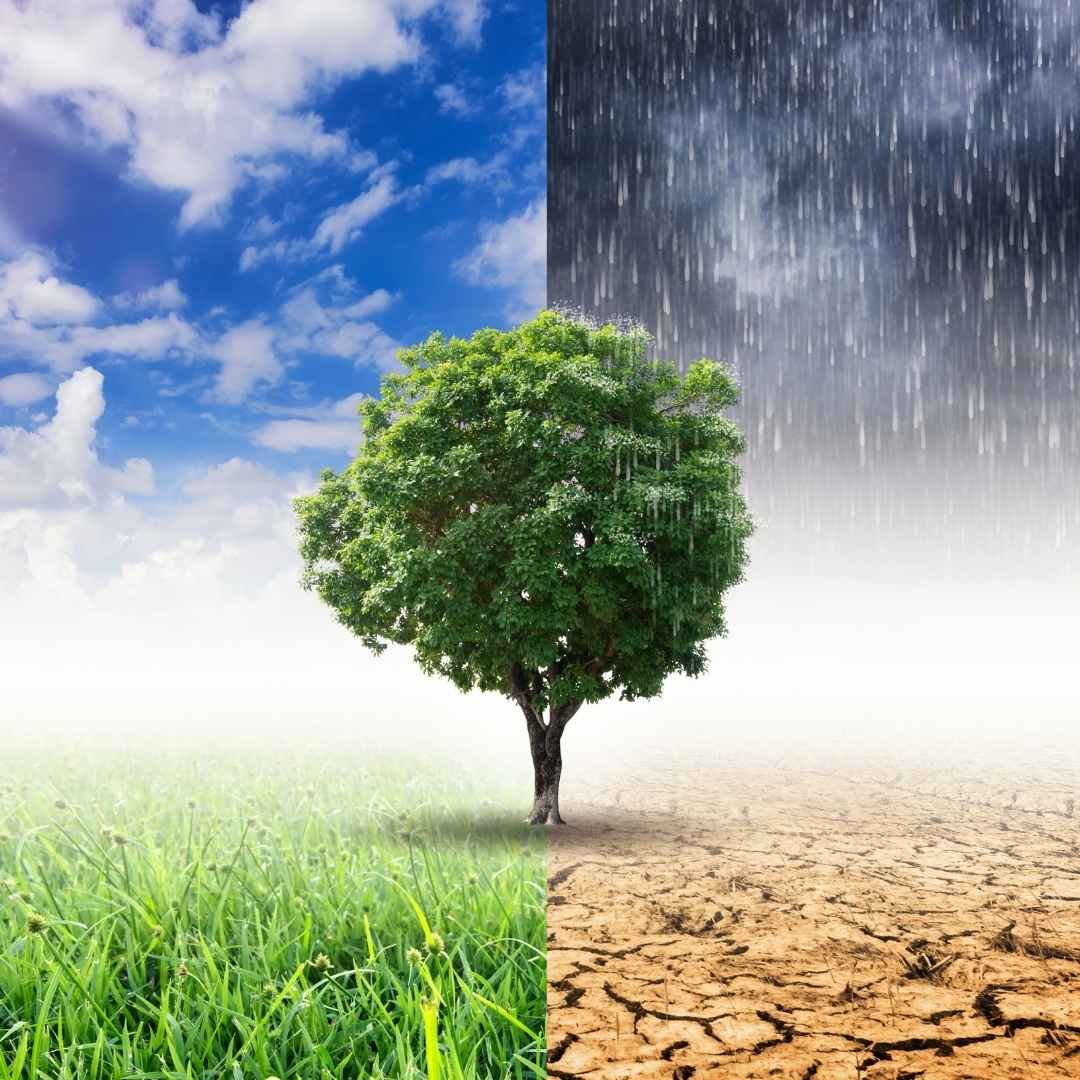
The Future of Global Climate: Projections and Challenges
1. Warming Trends and Key Drivers
Current Situation: Global climate is threatened: Global temperatures have risen by approximately 1.1°C since pre-industrial times, primarily due to increased concentrations of greenhouse gases (GHGs) like carbon dioxide (CO₂), methane (CH₄), and nitrous oxide (N₂O). Human activities such as burning fossil fuels, deforestation, and industrial processes are the main contributors.Future Projections: The Intergovernmental Panel on Climate Change (IPCC) outlines several scenarios in its reports, ranging from low-emission pathways to high-emission ones:- Low-Emission Pathway (SSP1): If humanity rapidly decarbonizes, global temperatures could stabilize at 1.5°C to 2°C above pre-industrial levels by 2100.
- High-Emission Pathway (SSP5): Under a “business-as-usual” scenario, temperatures could rise by 3°C to 4°C or more by 2100, with catastrophic consequences.
2. Impacts of Climate Change
A. Environmental Impacts
- Melting Ice and Rising Seas: The Arctic is warming four times faster than the global average, leading to ice sheet melting in Greenland and Antarctica. This contributes to rising sea levels, projected to increase by 0.6 to 1 meter by 2100 under high-emission scenarios, threatening coastal cities and low-lying islands.
- Biodiversity Loss: Ecosystems are struggling to adapt. Coral reefs, which support 25% of marine life, could face near-total collapse if temperatures rise above 2°C.
- Extreme Weather Events: More frequent and severe hurricanes, droughts, heatwaves, and floods are already evident and are expected to worsen.
B. Social and Economic Impacts
- Food Security: Changes in rainfall patterns and temperature increases are disrupting agricultural yields. Staple crops like wheat, rice, and maize are particularly at risk.
- Health Risks: Rising temperatures exacerbate heat-related illnesses, expand the range of vector-borne diseases, and reduce air quality.
- Economic Inequality: Developing nations, especially in Africa, South Asia, and small island states, are disproportionately affected due to limited resources for adaptation.
C. Feedback Loops
Positive feedback loops, where initial warming triggers further warming, could exacerbate the situation:- Permafrost Thawing: Releases trapped methane, a potent greenhouse gas.
- Forest Dieback: Loss of carbon-sequestering forests, such as the Amazon, turning them into carbon sources.
3. Mitigation and Adaptation: The Path Forward
A. Mitigation Strategies
- Energy Transition: Accelerating the shift to renewable energy sources such as solar, wind, and nuclear is critical. Electrification of transportation and industries also plays a vital role.
- Carbon Sequestration: Techniques like afforestation, soil carbon storage, and direct air capture are essential for removing CO₂ from the atmosphere.
- Global Agreements: International frameworks like the Paris Agreement aim to limit warming to 1.5°C to 2°C, but achieving these targets requires stronger commitments and enforcement.
B. Adaptation Strategies
- Infrastructure: Building resilient infrastructure to withstand extreme weather events.
- Water Management: Enhancing water conservation and developing desalination technologies.
- Community Planning: Relocating vulnerable populations and developing adaptive agricultural practices.
Other subjects suitable for a litte enlightenment
Meet Willow a total gamechanger in computer scienceMeet Willow a total gamechanger in computer science
The Leisure Family
Eight sites, one family — travel, wine, sport and sharper thinking. Explore the rest of the universe.
Rejser · DK
Traveltalk.dk
Rejser med dybde — for den nysgerrige rejsende.
Travel · Intl
Traveltalk.travel
Travel with depth, the world over.
Inspiration
Vacation-Talk
Travel inspiration, destinations & ideas.
Vin
Winetalk.dk
Vin som hverdagens luksus.
Sport
WorldSportTalk
Global sport, up close.
Ideas · AI
Think Smarter
Clearer thinking — and AI in particular.
The Group
Leisuretalk
The whole family, in one place.
For business
Gadvisory
Is your business AI-ready? Take the test.