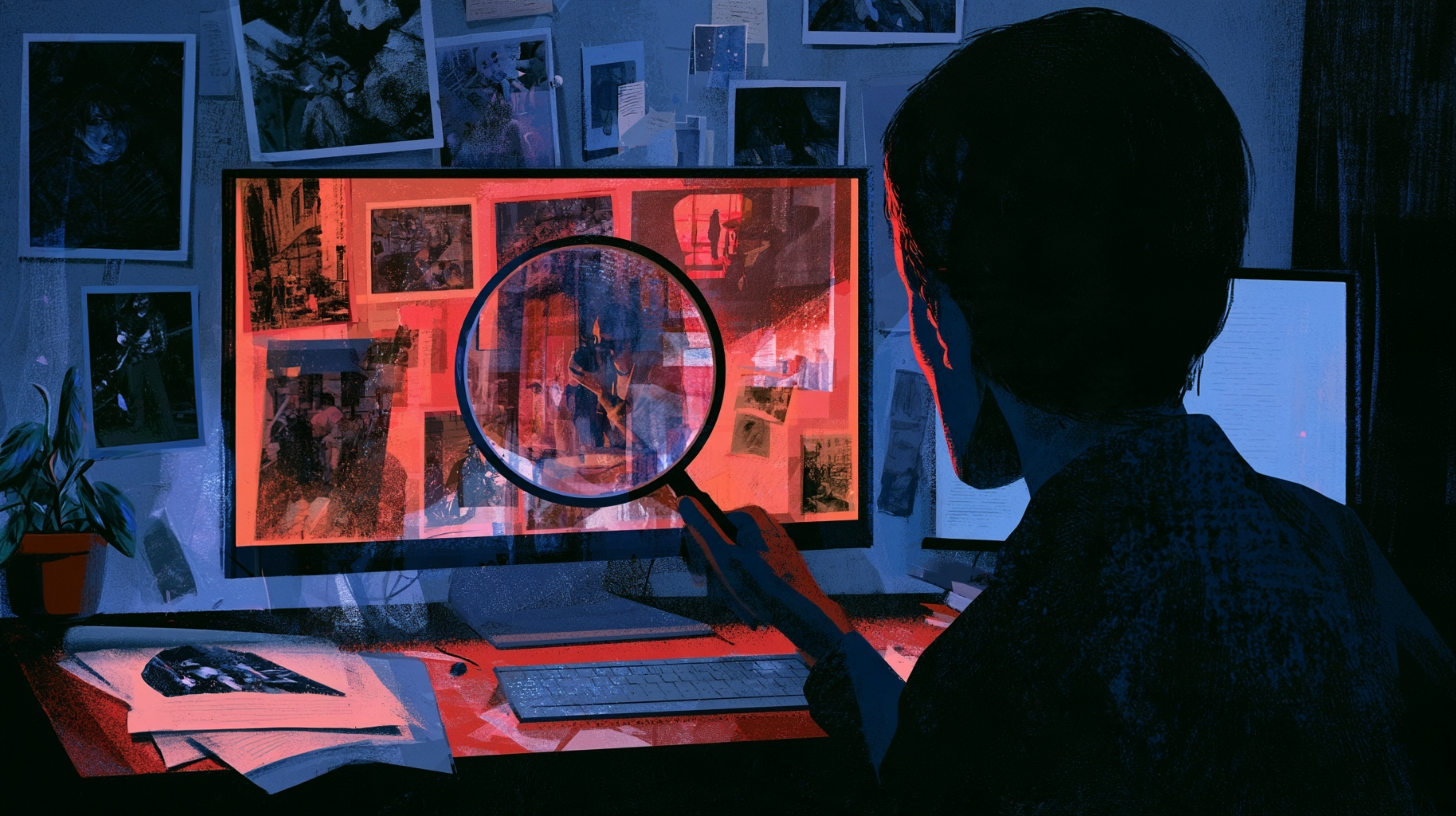
Is that photo real? What a fake image wants from you
Most fake images are not deepfakes. They are real photos with the wrong caption. Five questions that work even when your eyes can’t tell the difference.
To understand how to spot fake images, consider the context and source of the image before sharing it.
A manufactured picture is not really aimed at the truth. It is aimed at you: your attention, your anger and your share button. Learning to spot one starts with knowing that.
On the morning of 22 May 2023, a photograph of black smoke rising beside a large government building spread across Twitter. Accounts with blue check marks said it showed an explosion at the Pentagon. One of them was dressed up to look like Bloomberg News. Another was the real account of RT, the Russian state news service. For a few minutes, US stock indices dipped.
There was no explosion. The Pentagon’s own protection agency and the Arlington fire department said so the same morning. Nick Waters of the investigative group Bellingcat pointed out that the building’s front did not match, and that the fence seemed to melt into the crowd barriers. He also noticed something more telling: nobody else had posted a picture. There were no other angles and no witnesses, just one image travelling very fast (NPR).
That last observation is the most useful thing in this article. We will come back to it.
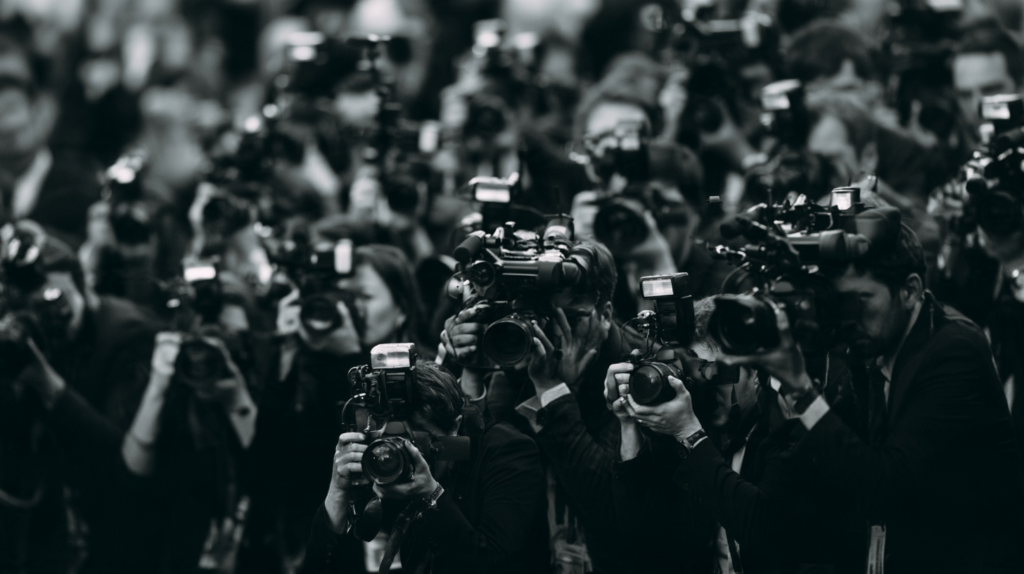
How much of what you see is fake?
Nobody can count every manipulated image online. What exists are careful samples, and they point the same way.
A Google-led team annotated misinformation from more than 135,000 published fact checks. Most recently, about 80 per cent of the false claims involved media such as images or video. AI-generated images were rare in that material until spring 2023, then rose sharply (Dufour et al., AMMeBa, 2024).
A 2026 study of X’s Community Notes gives a more recent picture of the platform itself. Researchers examined 66,135 posts where notes flagged a misleading image, from 2021 to January 2026. The breakdown:
- 60.2 per cent used a real photo with a false caption.
- 23.3 per cent used an edited photo.
- 16.3 per cent used an AI-generated image.
The AI share has grown with each major release of image tools (Chrysidis et al., 2026).
Two things follow. First, the fake you are most likely to meet is not a deepfake at all. It is a genuine photograph wearing the wrong label. Second, the AI share is small but punches above its weight. In the same study, AI images were 1.56 times more likely to be among the most viral posts than their numbers alone would predict.
People feel the pressure. In the Reuters Institute’s 2025 survey, 58 per cent of respondents said they worry about telling what is true from what is false in online news (Digital News Report 2025).
Why people make them
Faked images are made for a handful of recurring reasons. Naming the reason is often faster than examining the pixels.
- Attention for sale. Engagement earns money and followers. A startling image is the cheapest way to get both, whether or not it is true.
- Money directly. Fake endorsements, invented disasters used to collect donations, or a market-moving shock like the Pentagon picture.
- Influence. Images that confirm what a group already believes about its opponents, or that make an event look larger, smaller, calmer or more violent than it was.
- Personal harm. Fabricated or altered images of real people, used to humiliate, blackmail or intimidate.
- Play. Some images are made as jokes or experiments. In March 2023, a picture of Pope Francis in a white designer puffer jacket was generated with Midjourney and posted on Reddit. It drew millions of views, and many people took it for real before anyone pointed out the distorted hand holding a water bottle (CBS News).
The last category matters. Harmless intent does not stay harmless once an image leaves its context. A joke on Reddit becomes “news” three shares later.
Not every manipulation comes from strangers either. In March 2024, AP, AFP and other photo agencies withdrew an official family photograph released by Kensington Palace after spotting signs of editing. The Princess of Wales said she had been experimenting with editing and apologised for “any confusion” (CNN). There was no AI and no plot, and a trusted institution still lost a measure of trust in an afternoon.
The part you control
Here is the honest concession first: you will not reliably catch a good fake by eye.
Researchers found in 2022 that AI-generated faces had become indistinguishable from real ones. People also rated them as more trustworthy (Nightingale and Farid, PNAS). Automated detectors are not a safe refuge either. On real images from X, the best systems in the 2026 study were right only about 70 per cent of the time. One detector caught 75 per cent of AI images in early 2023 and just 39 per cent by late 2025, as the generators improved (Chrysidis et al., 2026).
So the most dependable test is not about the image. It is about the situation around it. Five questions, in order:
- What does it want me to feel? Outrage, fear, triumph and pity are the emotions that make you share without checking. A strong feeling is not proof of a fake, but it is the signal to slow down.
- Where did it come from? Run a reverse image search (Google Lens, TinEye or Bing). Many “breaking” photos turn out to be years old, or taken in another country. This catches the most common kind of fake, the real photo with a false caption.
- Who else saw it? Real events leave many traces: other angles, other witnesses, local reporters. This was Bellingcat’s point about the Pentagon. One dramatic image with no companions is a warning.
- Does the detail hold? Look at hands, text on signs, reflections, shadows, and the edges where objects meet. Look for fences that melt and jewellery that fuses to skin. Treat this as supporting evidence only. These flaws are disappearing.
- Who gains if I believe it, and if I share it? This is the think-smarter question. It works even when every other check comes back empty.
Then add one habit: wait. The Pentagon hoax was exposed the same morning. Most fakes are debunked quickly. The damage is done by the people who shared them in the first ten minutes.
On X specifically, check the replies and look for a Community Note. The 2026 study found that once AI images are flagged, contributors reach agreement on them faster than on other misleading posts. The catch is that the first note on an AI image typically takes more than 11 hours. Notes are a useful second opinion. They do not replace your own pause.
What it costs when we get it wrong
The obvious cost is a false belief: a market twitch, a mistaken donation, a person wrongly blamed.
The larger cost is quieter. Two legal scholars, Robert Chesney and Danielle Citron, named it the liar’s dividend (California Law Review, 2019). Once everyone knows images can be faked, anyone caught on camera can claim the real picture is fake. Doubt becomes a shield for the guilty.
This is where critical thinking can tip into its own failure. Believing everything is a problem. Believing nothing is also a problem, and it is exactly what the most skilled manipulators want. A public that trusts no image cannot be shown anything.
The aim is not suspicion. It is calibration: holding each image at the level of confidence the evidence supports, and changing your mind when the evidence changes.
Avoid being taken for a ride: Use the bullshit detector
What society can do, and is doing
No single fix exists. Three approaches to spot fake images are running in parallel. You will most likely experience, you get much better at it, just using these simple rules and ask yourself: Is this a fake image?
Labelling by law. In the EU, Article 50 of the AI Act applies from 2 August 2026. It requires anyone publishing a deepfake to disclose that it is artificial, and requires AI providers to mark generated content so it can be detected. Some marking duties for systems already on the market were pushed to 2 December 2026 (Paul, Weiss summary). The rules bind honest actors. People deliberately deceiving you will not label their work.
Provenance technology. An industry standard called C2PA, or Content Credentials, attaches a cryptographically signed record to an image. The record shows where it was made and how it was edited, and any tampering breaks the signature (C2PA). Its weakness is that the record can be stripped out. Its strength is that it flips the question from “can we prove this is fake?” to “can this prove it is real?”
Education. The Media Literacy Index, which ranks European countries on resilience to disinformation, put Denmark, Finland, Ireland and the Netherlands jointly at the top in 2026. Its authors credit education above all. They recommend teaching media literacy from an early age and building awareness of confirmation bias and emotional manipulation (OSI Sofia, 2026).
That last recommendation describes what this article has tried to do. Laws and labels will catch some fakes. Only the reader can catch the moment of wanting to believe.
The short version of how to spot fake images
You are not a neutral observer of your feed. You are the audience the image was built for.
Knowing that does not make you immune. It gives you a routine:
- Notice the feeling.
- Find the source.
- Look for other witnesses.
- Ask who gains.
- Wait before you share.
The pixels will keep getting better. The questions do not expire.
think-smarter.net is independent. For organisations that want structured training on information resilience, see gadvisory.net.
Perhaps visit Leisure Media Group´s introductory webbite for lifestyle topic?
Eight sites, one family — travel, wine, sport and sharper thinking. Explore the rest of the universe.