The “sleep on it” advice is older than coffee, and it is one of the few pieces of folk wisdom that the lab has ratified. The companion advice — that the dream you had the night before a big decision is trying to tell you something — has not held up the same way. Both sit in the same neuroscience, but they get different answers, and confusing them turns a useful habit into a poor one.
Here is where the research actually stands, what it can support, and what it cannot.
The Science of Sleep and Problem Solving
Sleep does specific things to thinking, and the effect sizes are not small. In a now-classic 2004 study, participants given a number-reduction task were roughly twice as likely to spot a hidden shortcut after a night of sleep than after the same hours awake.
Robert Stickgold’s work at Harvard, Sara Mednick’s at UC Irvine, and Matthew Walker’s at Berkeley have repeatedly shown that sleep — particularly REM sleep — improves three things:
Memory consolidation
Emotional regulation
Creative insight (distant-association recombination)
That last one is the closest thing science has to “the answer arrives in the morning.” It is not magical retrieval. It is the brain weakening tight, recent associations and strengthening looser, older ones, which is why a breakthrough often feels like something you already half-knew.
What sleep does not do is generate information you did not have. It integrates and reweights what is already there. If a decision is stuck because you do not know enough, no amount of sleep will fix that.
What Sleep Actually Does to a Decision
When you face a complex problem, a night of sleep fundamentally alters your brain’s approach in three distinct ways:
It lowers the emotional charge on the inputs. REM sleep selectively dampens the amygdala response to recent emotional memories — Walker calls it “overnight therapy,” and the lab data behind the phrase is unusually clean. The decision will feel less urgent, less personal, and less threatening in the morning. That is sometimes a feature and sometimes a bug. If the threat was real, you have now muted your warning signal.
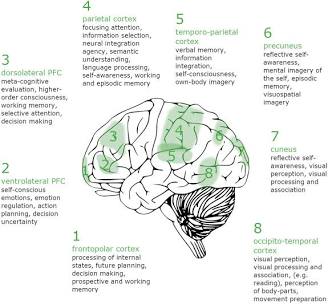
It resets decision fatigue. The prefrontal cortex, which does the heavy executive lifting, is metabolically expensive and runs down through the day. Sleep restores its baseline. You will think more clearly in the morning not because you are wiser, but because you are not running on fumes.
It allows neural recombination. Slow-wave sleep replays the day’s events at compressed speed and integrates them with older memory traces. REM then mixes the result with semantically distant material. The brain stops asking what did I just see and starts asking what does this remind me of. The output, sometimes, is a connection you could not have made awake.
Why Your Dreams Are Not Coded Messages
Understanding the Role of Dreams in Problem Solving
The dream itself is a separate question. Modern dream research is unsettled — there is no consensus theory — but the candidates are converging on something unflattering to dream interpretation as a practice.
The Activation-Synthesis Model: Allan Hobson treats dream content as the cortex’s attempt to make narrative sense of essentially random signals from the brainstem during REM.
The Overfitted-Brain Hypothesis: Erik Hoel suggests dreams are deliberately weird, hallucinatory, and disjointed because their function is to inject noise into your neural networks and prevent the brain from over-fitting to recent experience. On that view, the strangeness is not a code to be cracked. It is the point.
Threat-Simulation Theory: Antti Revonsuo frames nightmares as evolutionary rehearsal for danger — useful in aggregate, not as a specific message.
What is missing from all of these is the Freudian premise: that the dream is a coded message from a wiser part of you. There is no good evidence for that, and several lines of evidence against. The content of your dream is, to a first approximation, noise filtered through the salience map of your recent days.
The Nightmare-Before-the-Meeting Problem
So why does the nightmare before a decision day feel so loaded? Two distinct psychological biases explain this phenomenon:
1. Downstream Anxiety
Anxiety dreams are caused by anxiety, not the other way around. If a high-stakes meeting is on the calendar, your sympathetic nervous system is already elevated when you go to bed; that is the input REM is working with. The nightmare is downstream of the worry, not a separate signal about it.
2. Selection Bias
You remember dreams selectively. The night before a decision, any dream-shaped fragment that touches the decision gets encoded and recalled; the dozens of other neutral fragments are dropped. This is the same selection bias that makes horoscopes feel accurate.
The honest interpretation of a nightmare before a decision day is: I am anxious about this decision. Which you already knew. The nightmare adds no new evidence. What it can do — and this is the only legitimate use — is prompt the question what specifically am I afraid of? If the fear can be named concretely (the deal falls through, the partner backs out, the launch flops), it can be tested against the actual evidence. If it cannot be named, the dream was noise.
The same logic applies to a dream that seems to “endorse” the decision. The dream is not endorsing the choice. Your hopeful framing of the dream is.
A Practical Rule for the Night Before: Sleep on It, Don’t Read the Dream
Sleeping on it works because of consolidation, emotional dampening, and prefrontal reset — none of which require you to remember a single image from the night. The benefits arrive whether you dream vividly or not at all.
Reading the dream — assigning it intent, treating it as guidance — works against you in two ways. It substitutes a vivid, easily-recalled fragment for the actual evidence on the decision, and it grants a stochastic process the authority of a verdict. The brain is happy to be persuaded by either; it is a pattern-matching organ first and a truth-tracker second.
If you wake with a dream that seems relevant, treat the reaction as data, not the dream. What did the dream make you feel, what fear or hope did it surface, and is that fear or hope something you have been avoiding looking at directly? Those are real signals, all generated by you, while you slept. Use them, then put the dream itself down.
What We Still Do Not Know About Dream Science
The field is moving rapidly. There is no unified theory of why we dream. There are no good measures of dream content beyond self-report, which is famously unreliable. Lucid-dreaming research, real-time communication-during-REM experiments (such as Konkoly and colleagues’ 2021 study where sleeping subjects answered yes/no questions via eye movements), and the overfitted-brain hypothesis are all cutting-edge areas of study. Any confident claim about what a dream means is running well ahead of the evidence.
What is stable enough to act on is narrower: sleep helps decisions, dreams probably do not, and the strongest predictor of good morning judgement is having slept long enough to have had REM at all.
The advice that survives all this is the oldest version of it: Sleep on it. The dream is not the message. The morning is.
Sources and Further Reading
Wagner, Gais, Haider, Verleger, Born (2004). Nature, “Sleep inspires insight.”
Walker & van der Helm (2009). Psychological Bulletin, “Overnight therapy? The role of sleep in emotional brain processing.”
Hobson & McCarley (1977). American Journal of Psychiatry, original activation-synthesis paper.
Hoel (2021). Patterns, “The overfitted brain hypothesis.”
Revonsuo (2000). Behavioral and Brain Sciences, threat-simulation theory.
Konkoly et al. (2021). Current Biology, “Real-time dialogue between experimenters and dreamers during REM sleep.”
Eight sites, one family — travel, wine, sport and sharper thinking. Explore the rest of the universe.