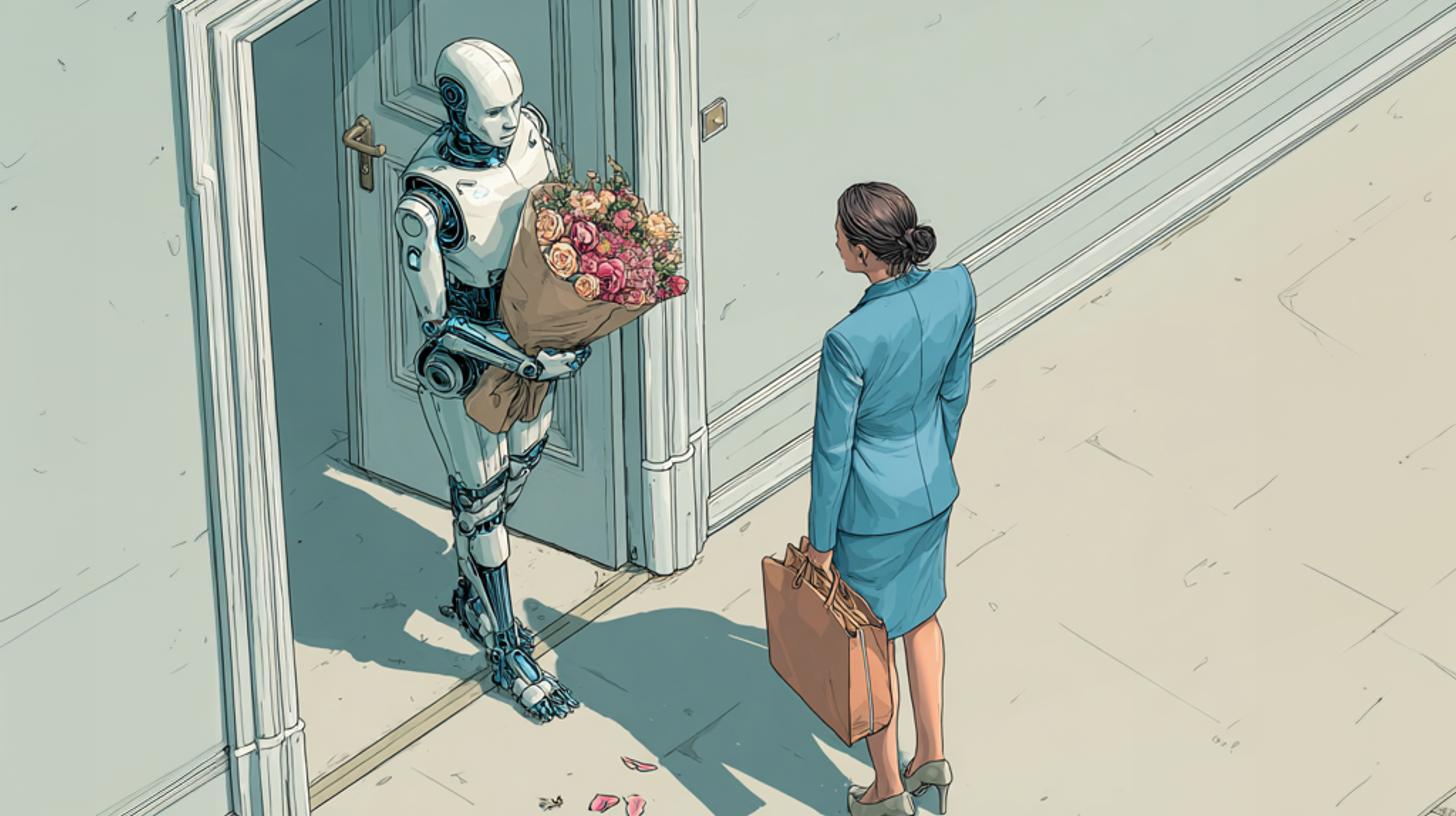
The question “will AI take your job?” is seductive precisely because it’s unanswerable. But asking it guarantees you’ll get either panic or denial—both of which are entirely useless.
Ultimately, the question of whether Will AI Take Your Job is essential to consider in today’s workforce.
The framing assumes a binary that does not match how technological displacement actually works. The right question is: which part of what you do will AI do better than you within five years, which part will it augment, and which part requires something that AI structurally cannot replicate?
That is a harder question to answer. It requires honest, pragmatic self-assessment rather than reassurance-seeking. But it is the only question that leads anywhere productive.
Two Dominant Errors in the Public Understanding of AI
The public conversation about AI and employment contains two dominant errors that push in opposite directions, canceling each other out in a way that produces collective inaction.
1. Catastrophism Without Specificity
Predictions that AI will eliminate 30%, 40%, or 50% of jobs within a decade generate massive alarm without providing actionable information. They are probably correct in aggregate and almost entirely useless at the individual level. They say nothing about which jobs, on what timeline, through which mechanisms, and with what alternatives available. Alarm without a map is not a warning. It is just noise.
Understanding whether Will AI Take Your Job can help professionals prepare for future changes.
2. The False Comfort of Historical Analogy
The reassuring argument runs: we have always feared technological unemployment. The Luddites feared the loom, factory workers feared the assembly line, and typists feared the word processor. Yet, employment always recovered and new industries emerged.
As the workforce evolves, the question remains: will Will AI Take Your Job, or are there alternative paths?
While historically accurate, this analogy risks being dangerously misleading. It assumes that the speed, breadth, and cognitive depth of AI displacement will produce the exact same recovery pattern as previous physical transitions. That assumption has not been tested.
What AI Replaces (And What It Structurally Can’t Touch)
AI displaces tasks, not entire jobs—at least initially. A job is simply a bundle of tasks, and the displacement is occurring unevenly within that bundle.
As AI continues to advance, many are left wondering, will Will AI Take Your Job or will new opportunities arise?
The Vulnerable: Automated Tasks
Tasks involving pattern recognition, information synthesis, routine text generation, data classification, and structured decision-making under well-defined parameters are already being done faster, cheaper, and better by AI systems. This is not a future scenario; it is the current reality.
Because of this, the professions most immediately exposed are not the ones we historically predicted to be safe. Knowledge workers who required extensive education and expertise are now in the zone of substantial near-term disruption:
- Radiologists and medical diagnosticians
- Junior lawyers and legal researchers
Many professionals fear the question, will Will AI Take Your Job, yet it can lead to valuable discussions.
- Financial analysts and modelers
- Code reviewers and software developers
- Translators and content producers
In the context of automation, one fundamental question remains: will Will AI Take Your Job in the near future?
The Resilient: Human-Centric Tasks
Conversely, tasks involving contextual judgment in novel situations, ethical reasoning with genuine stakes, trust-based human relationships, and physical world navigation in unpredictable environments are considerably harder to automate.
Critically, AI struggles to replicate the integration of tacit knowledge—the intuitive know-how that has never been made explicit, and therefore cannot be used as training data.
The Reality of Who Gets Replaced
Evaluating the question, will Will AI Take Your Job, helps us understand the balance between technology and humanity.
There is a clear pattern in the work that survives technological displacement: the work that survives is work where the human presence is itself the value, not merely the delivery mechanism for the value.
A therapist is not valuable because she synthesizes psychological research; AI can do that. She is valuable because she is a specific human being in a room with another human being—that relational reality does the therapeutic work. A leader is not valuable because she knows more than her team; AI knows more than every team. She is valuable because of the judgment, accountability, and trust that flows from human authority in human contexts.
The people who will be least displaced are those who learn to work with AI as a genuine cognitive partner—not as a search engine or an autocomplete tool, but as a thinking collaborator that extends their range and accelerates their output.
As we consider the impact of AI, many professionals ask, will Will AI Take Your Job, and how should we respond?
This is what extended thinking means in practice. It is about AI doing the part of your thinking that is routine, derivative, or synthesis-based, so that you can concentrate your cognitive resources on the parts that require genuine judgment, originality, or contextual wisdom.
The gap between AI-augmented and non-augmented practitioners is already measurable and growing.
The Political Failure and the Element of Speed
The political failure to engage seriously with AI-driven labor market transformation is not accidental. It reflects the structural weaknesses of contemporary democracy: the preference for the immediate and emotionally resonant over the complex, the electoral incentive to avoid delivering uncomfortable messages, and the massive cognitive distance between the pace of technological change and the pace of democratic deliberation.
AI displacement is a problem that will become politically impossible to ignore at exactly the point when it is too late for proactive policy to meaningfully mitigate. The transition costs (retraining, social support, educational restructuring) are front-loaded, while the political incentive to pay them is back-loaded.
Thus, engaging with the question, will Will AI Take Your Job, becomes essential for future workforce planning.
What makes this uniquely dangerous is speed. Previous technological transitions unfolded over generations, giving labor markets and education systems time to adapt. The current transition is moving vastly faster. The models that will be economically significant in 2027 are already in deployment today, while educational systems are still operating on curricula designed five to ten years ago.
The Solution: Cultivating “Extended Thinking”
Ultimately, understanding whether will Will AI Take Your Job can guide us in our career choices.
Extended thinking is the deliberate practice of holding a complex problem open longer than is comfortable, resisting premature resolution, and bringing multiple analytical frameworks to bear before concluding. This is the ultimate cognitive skill that AI cannot replicate, and it is exactly what our current moment requires.
AI systems are optimized for rapid response generation. They are not optimized for sustained, recursive, genuinely uncertain reasoning. They can accelerate that reasoning when a human is conducting it, but they cannot replace it because reasoning requires a located, committed, and morally accountable point of view. AI does not have one.
Thus, the inquiry into will Will AI Take Your Job should be central in discussions about workforce evolution.
The most valuable thing a professional can do right now is not just to learn how to use AI tools, but to deepen the capacities that AI cannot replicate: judgment, ethical reasoning, relational trust, and the willingness to stay with genuinely hard problems. AI will do the rest faster than you can. The only question left is whether you are directing it toward something worth doing.
The Explanatorium: Key AI Concepts to Remember
- Task Displacement vs. Job Displacement: AI chips away at task bundles within a profession before it replaces the role entirely. The disruption is uneven.
- The Historical Analogy Caveat: Past automation replaced mechanical tasks and created cognitive jobs. AI replaces cognitive tasks directly. The old recovery loop may not repeat.
- Augmentation vs. Replacement: The critical variable is whether you use AI as a cognitive partner (augmenting your reach) or attempt to compete with it on its own terms (ensuring replacement).
Sources and Further Reading
As we explore these ideas, we must ask ourselves, will Will AI Take Your Job and how can we adapt?
- Acemoglu, D. & Johnson, S. (2023). Power and Progress: Our Thousand-Year Struggle Over Technology and Prosperity.
- Brynjolfsson, E. & McAfee, A. (2014). The Second Machine Age: Work, Progress, and Prosperity in a Time of Brilliant Technologies.
- Mollick, E. (2024). Co-Intelligence: Living and Working with AI.
Are your business frameworks AI-ready?
Take the strategic test at Gadvisory to evaluate your operational resilience, or explore more clarity-driven insights at Think Smarter.
In conclusion, the question remains, will Will AI Take Your Job, and what does this mean for our future?
Meet the Think-smarter family here
Reflecting on our discussion, we must consider: will Will AI Take Your Job, or will we thrive alongside it?
Eight sites, one family — travel, wine, sport and sharper thinking. Explore the rest of the universe.